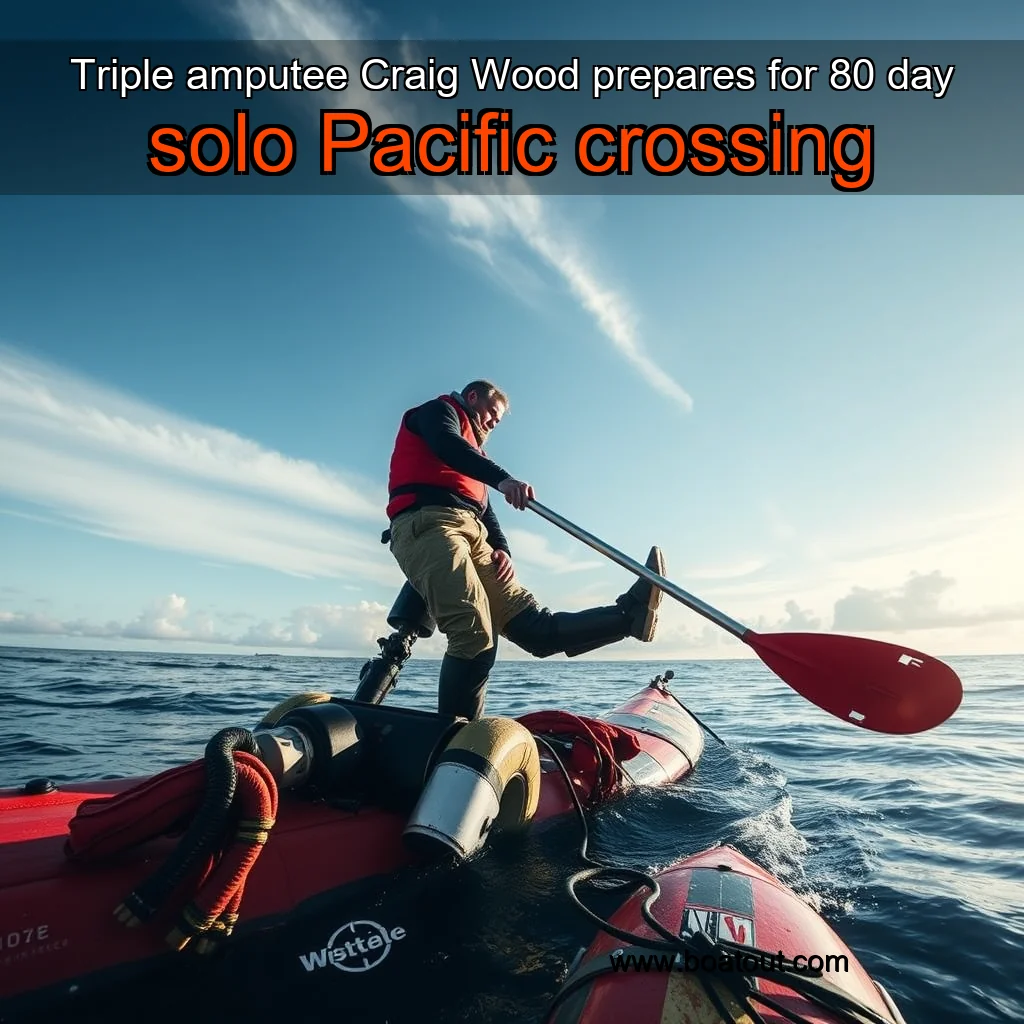
Triple amputee Craig Wood prepares for 80 day solo Pacific crossing
February 25, 2025 | BoatOut
He was injured in a training exercise in 2011 and has been living with a spinal cord injury since then.
The Road to Recovery
Craig’s journey to recovery began with a series of surgeries and rehabilitation sessions. He underwent spinal cord injury rehabilitation at the Rotherham Hospital, where he received intensive physical therapy and occupational therapy. The goal of these sessions was to help him regain as much mobility and independence as possible. The rehabilitation process was not without its challenges. Craig faced numerous setbacks, including muscle atrophy and nerve damage, which made it difficult for him to regain strength and sensation in his legs. Despite these obstacles, Craig remained determined to overcome his injuries and regain his independence. He worked tirelessly with his therapists to develop a personalized rehabilitation plan that addressed his specific needs and goals.*
The Impact of Technology
Craig’s recovery was also influenced by the use of technology. He began using a wheelchair and other assistive devices to help him navigate his daily life. He also started using a tablet and smartphone to stay connected with friends and family, and to access information and resources that could aid in his recovery. The use of technology helped Craig to stay engaged and motivated, and to maintain a sense of independence despite his physical limitations.
He will be accompanied by his wife, who will be sailing solo for the first time in her life. The couple will be sailing to the island of Sardinia, then to the French Riviera, and finally to the Mediterranean coast of Spain.
The Journey Begins
Craig and his wife will embark on an incredible adventure, covering over 10,000 miles of ocean.
The Quest for the Perfect Sailing Conditions
As a seasoned RYA Yachtmaster, Craig is no stranger to the challenges of navigating the open ocean. His latest endeavor, however, is one of the most ambitious of his career: a solo crossing of the Pacific Ocean to Hawaii. The journey promises to be a thrilling test of endurance, skill, and luck.
Preparing for the Long Haul
Before embarking on his epic voyage, Craig has been meticulously preparing his vessel, a sturdy 40-foot monohull, for the long and arduous journey ahead. He has carefully checked and maintained the boat’s systems, ensuring that everything is in working order.
This time, he was attempting to cross the Atlantic Ocean, a journey of over 3,000 miles and 30 days.
The Unstoppable Craig
Craig is an American adventurer who has been fascinated by the ocean since he was a child. Growing up in a family of sailors, he was always drawn to the sea. After losing his limbs in a tragic accident, Craig’s determination to explore the world only intensified.
## The Challenge of the Atlantic
Craig’s journey across the Atlantic Ocean is a daunting task, even for the most experienced sailors. The open waters pose numerous challenges, including strong currents, unpredictable weather, and the risk of encountering marine life such as sharks and jellyfish. The Atlantic Ocean is a vast and unforgiving environment, with waves reaching heights of over 30 feet and winds of up to 100 knots. The journey requires a high level of physical and mental endurance, as well as exceptional navigation skills.
Craig’s story is a testament to the power of human resilience and the impact of dedicated rehabilitation programs.
The Road to Recovery
Craig’s journey began with a devastating spinal cord injury that left him paralyzed from the chest down. The accident occurred while he was working as a firefighter in the UK. The severity of his injury was evident from the start, with Craig’s spinal cord severed at the T12 level. The initial prognosis was grim, with many experts predicting that he would never regain the use of his legs.
The Rehabilitation Process
Craig’s rehabilitation journey was a long and arduous one. He underwent a series of surgeries, including a spinal fusion procedure to stabilize his spine. The surgery was followed by a period of intensive physical therapy, where Craig worked tirelessly to regain control over his muscles.
He had a vision of a boat that could sail from the southern tip of South America to the northern tip of New Zealand, a journey of over 8,000 nautical miles. He wanted a boat that could handle the rough seas and strong winds of the Southern Ocean, and he wanted it to be fast and efficient.
The Visionary Sailing Project
Craig’s vision for a boat that could tackle the Southern Ocean was ambitious, to say the least. He wanted a boat that could sail from the southern tip of South America to the northern tip of New Zealand, a journey of over 8,000 nautical miles. This journey would take the boat through some of the roughest seas and strongest winds in the world. Craig’s goal was to create a boat that could handle these conditions and still be fast and efficient.
They started dating and eventually got married. Renate was a strong supporter of Craig’s sailing ambitions and encouraged him to pursue his dreams.
The Unconventional Path to Sailing
Craig’s journey to becoming a Yachtmaster began with a chance encounter with Renate, a free-spirited traveler who was on her way to South America. The two met in Gibraltar, where Craig was living at the time, and their lives were forever changed.
Weather forecasting is crucial for sailors to navigate safely and successfully.
The Importance of Weather Forecasting in Sailing
Weather forecasting plays a crucial role in sailing, particularly when it comes to predicting the behavior of the wind and waves. A good weather forecast can make all the difference between a successful and a disastrous sailing trip. Here are some reasons why weather forecasting is essential for sailors:
He has also been fitted with a SOLAS-approved life raft and a SOLYNTES emergency position-indicating radio beacon.
The Ultimate Sailing Experience
Sailing is a sport that requires a combination of skill, strategy, and physical endurance. For those who take it seriously, the right equipment is essential to ensure a safe and enjoyable experience.
The winds were strong, and the boat was taking on water. Craig was worried, but he kept his cool and managed to navigate the boat to safety.
The Sailing Experience
Craig’s sailing experience is a testament to his bravery and determination. He has faced numerous challenges on the water, but his passion for sailing has never wavered. From the rugged coastlines of Argentina to the tranquil waters of Japan, Craig has navigated his way through some of the most unpredictable weather conditions. He has sailed solo, relying on his wits and experience to overcome obstacles. He has faced storms, rough seas, and equipment failures, but always managed to find a way to persevere. His sailing experience has taken him to some of the most beautiful and remote locations on the planet.
The Journey to Japan
Craig’s journey to Japan is a culmination of his sailing experience and his desire to explore new horizons. He has been preparing for this trip for months, studying the weather patterns, charting his course, and fine-tuning his boat.
“The storm was so intense that it was hard to keep the boat on course, and the crew had to be on high alert at all times.”
The Stormy Weather
The storm that hit the sailing vessel, the “Sea Dragon,” was unlike anything the crew had experienced before. The 50 knot gusts were a significant challenge, and the crew had to be extremely vigilant to avoid any damage to the boat. Key factors contributing to the storm’s intensity:
- High winds
- Rough seas
- Low visibility
- Sailboats
- Powerboats
- RIBs (Rigid Inflatable Boats)
- Fishing boats
- Luxury yachts
- Characteristics: Each type of boat has its unique characteristics, such as:**
- Sailboats: require wind to propel them
- Powerboats: use engines to propel them
- RIBs: are lightweight and versatile
- Fishing boats: are designed for fishing and often have specialized equipment
- Luxury yachts: offer luxurious amenities and accommodations
- Purchase price
- Registration fees
- Insurance premiums
- Maintenance and repair costs
- Ongoing Costs: In addition to the initial costs, there are ongoing expenses to consider, such as:**
- Fuel and maintenance costs
- Insurance premiums
- Storage and mooring fees
- Equipment and accessory costs
The crew’s experience and training played a crucial role in navigating the storm. However, even with their expertise, the storm’s unpredictability made it difficult to anticipate its next move.
The Crew’s Experience and Training
The crew of the “Sea Dragon” had extensive experience sailing in various weather conditions. They had been trained to handle different types of storms, but nothing could have prepared them for the intensity of this particular storm.
“I want to raise awareness about the amputee community and the challenges they face, and to show that with determination and hard work, anything is possible.”
The Journey Begins
Craig’s journey to raise £50,000 for Blesma and Turn to Starboard started with a simple yet bold idea. He wanted to embark on a sailing expedition around the world, a feat that many people consider impossible. However, Craig is not just any ordinary person. He has a prosthetic leg and has been an amputee since the age of 12. Despite his physical limitations, Craig has always been driven by a passion for sailing and a desire to push beyond the boundaries of what is thought possible.
The Challenges of Sailing with a Prosthetic Leg
Sailing with a prosthetic leg presents a unique set of challenges. For one, the prosthetic must be designed to withstand the rigors of sailing, including the constant motion of the boat and the exposure to the elements. Additionally, the prosthetic must be able to provide a stable and secure platform for Craig to stand on, allowing him to navigate the boat with ease.
PBO is the UK’s leading magazine for boat owners, providing expert advice, news, and reviews to help you make the most of your time on the water.
A Guide to Boat Ownership
Understanding Your Boat
Before you start enjoying your boat, it’s essential to understand the basics of boat ownership. This includes knowing the different types of boats, their characteristics, and the costs associated with owning and maintaining them. * Types of Boats: There are various types of boats, including:**
Budgeting for Boat Ownership
Owning a boat can be expensive, and it’s essential to create a budget that covers all the costs associated with boat ownership. * Initial Costs: The initial costs of buying a boat can be significant, including:**
Maintenance and Repair
Regular maintenance and repair are crucial to extending the life of your boat and ensuring it remains in good condition.

news is a contributor at BoatOut. We are committed to providing well-researched, accurate, and valuable content to our readers.