How I got insurance for my DIY eBoat Practical Boat Owner
December 24, 2024 | BoatOut
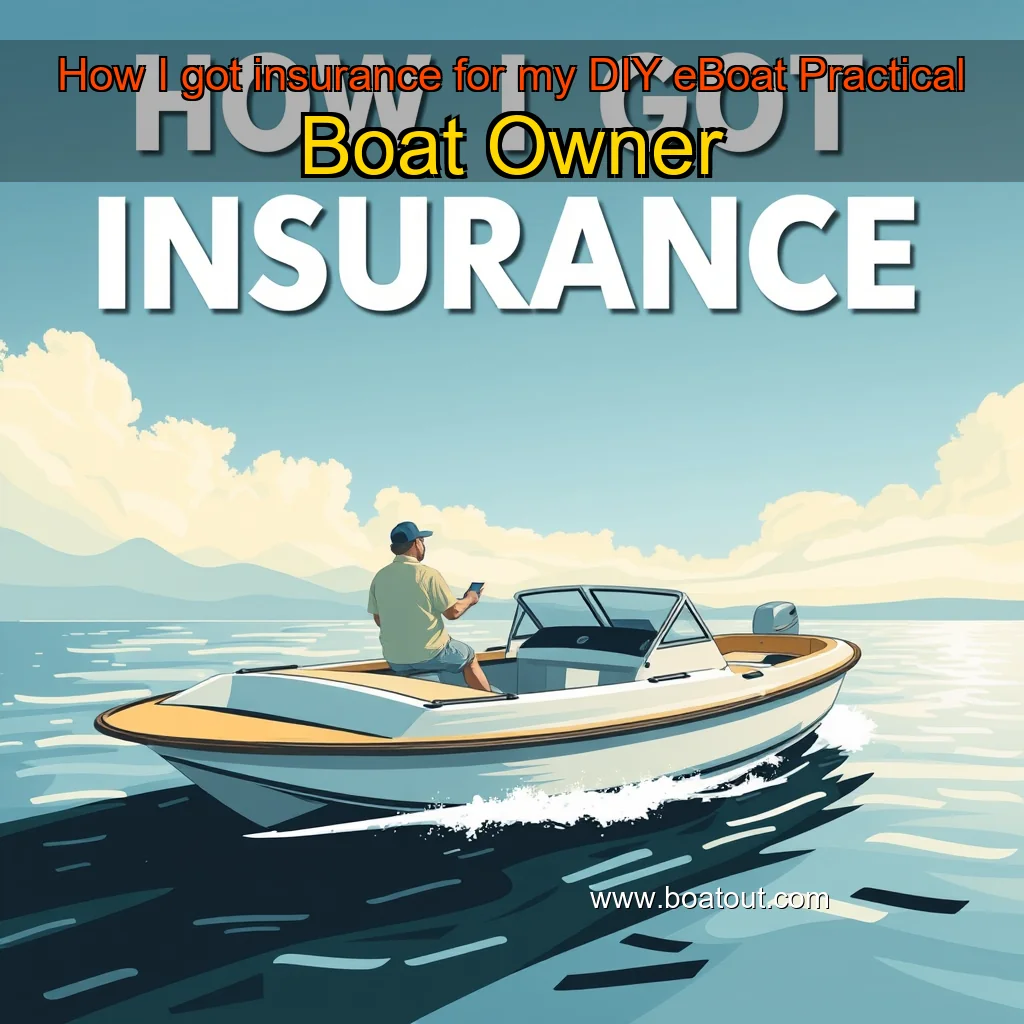
I decided to buy an electric boat, and after researching various models, I settled on a 2016 Sunseeker 43ft electric boat.
Choosing the Right Electric Boat
When selecting an electric boat, several factors come into play. Here are some key considerations:
This is not a luxury item, but rather a practical, sustainable, and innovative vessel that I can sail around the world with my family. This catamaran is designed to be environmentally friendly, with a solar panel array and wind turbine to harness energy from the sun and wind. The boat will also be equipped with a desalination system to provide fresh water for my family and passengers. The catamaran will be constructed from a combination of materials, including wood, aluminum, and carbon fiber, providing exceptional strength and durability. The goal of this project is to create a sustainable, environmentally conscious, and self-sufficient vessel that can minimize its impact on the marine ecosystem. The catamaran is designed to be lightweight, with a displacement of approximately 10 tons, making it easy to handle and maneuver. The solar panel array and wind turbine will provide a significant portion of the energy needed to power the boat, reducing reliance on fossil fuels and minimizing greenhouse gas emissions.
I had heard of a company called “Insurance Solutions” that specialized in marine insurance. I decided to contact them to inquire about their services and to get a quote.
Getting Started with Marine Insurance
Understanding the Basics
Marine insurance is a type of insurance that protects against losses or damages to vessels, including boats, ships, and other watercraft. It provides financial protection against various risks, such as accidents, theft, and natural disasters. When purchasing marine insurance, it’s essential to understand the basics of the policy, including the coverage, deductibles, and exclusions. Key aspects of marine insurance:
- Coverage: Protects against losses or damages to the vessel, cargo, or other assets. Deductibles: The amount you pay out of pocket before the insurance kicks in.
Electric boats face regulatory uncertainty as insurers weigh risks and costs.
The UK’s National Maritime Authority (NMA) has been working to develop a new set of regulations for the maritime industry, including those for electric boats. The NMA has been in talks with Pantaenius and other insurers to develop a new set of guidelines for insuring electric boats in the UK.
Recommended Reading: My friends and I sailed around Belize for 3 days on an all inclusive private yacht The price per person felt like an incredible valueThe Need for Regulation
The lack of regulation in the maritime industry has led to a lack of clarity and consistency in the insurance market. This has resulted in confusion and uncertainty for boat owners and operators, particularly those who are considering purchasing or operating electric boats. The NMA has recognized this need for regulation and has been working to develop a new set of guidelines for the maritime industry, including those for electric boats.
Key Challenges
- Insurers are concerned about the high upfront costs of electric boats, which can be a barrier to entry for some operators. There is a lack of standardization in the design and construction of electric boats, which can make it difficult for insurers to assess risk. The NMA is also concerned about the potential for electric boats to pose a risk to other vessels and the environment. ## The Role of Insurers*
- Ohm’s Law was primarily used to describe the relationship between voltage, current, and resistance in a circuit. However, it did not account for other important factors such as capacitance, inductance, and non-linear effects. This limitation made it difficult to apply Ohm’s Law in real-world scenarios, where these factors often played a significant role. ## The Collaboration*
- Battery degradation: Electric boat batteries have a limited lifespan and can degrade over time, reducing their capacity and overall performance. Charging infrastructure: The lack of widespread charging infrastructure can make it difficult for electric boat owners to charge their vessels, especially in remote areas. Higher maintenance costs: Electric boats require more frequent maintenance than traditional boats, including regular battery checks and potential replacement. * Liability concerns: Electric boats can be more hazardous than traditional boats due to the risk of electrical shock or fire. ## Misconceptions and Concerns**
- Assuming electric boats are inherently safer: While electric boats are generally safer than traditional boats, they are not immune to accidents or hazards. Believing electric boats are more expensive to insure: While electric boats may require more maintenance and have higher upfront costs, insurance premiums are not necessarily higher. Thinking electric boats are not covered by standard insurance policies: Many standard insurance policies do cover electric boats, but there may be additional requirements or exclusions. ## Overcoming the Challenges**
- Research and education: Owners and insurers should research and educate themselves about the risks and challenges associated with electric boats.
Electric boats require a more nuanced approach to underwriting due to their unique characteristics and alternative propulsion methods.
However, the unique characteristics of electric boats require special consideration.
Underwriting Process for Electric Boats
Key Differences from Traditional Combustion Engine Boats
The underwriting process for electric boats differs significantly from that of traditional combustion engine boats. While traditional boats are often underwritten based on their horsepower, size, and age, electric boats require a more nuanced approach. * Unique characteristics: Electric boats have distinct characteristics that set them apart from traditional boats. These include:**
- Lower horsepower: Electric boats typically have lower horsepower ratings, which can affect their insurance premiums. Alternative propulsion: Electric boats use alternative propulsion methods, such as electric motors, which can impact their insurance costs. * Environmental factors: Electric boats are often used in environmentally sensitive areas, which can increase their insurance premiums. #### Factors Affecting Underwriting**
Factors Affecting Underwriting
Several factors can affect the underwriting process for electric boats, including:
- Type of electric motor: The type of electric motor used in the boat can impact its insurance premiums. For example:**
- DC motor: DC motors are generally more expensive to insure than AC motors. High-performance motor: High-performance motors can increase insurance premiums due to their higher power output. * Battery type and capacity: The type and capacity of the batteries used in the boat can also impact insurance premiums.
This is because some modifications may void the policy’s warranty or affect the boat’s value.
Understanding the Risks of Modifications
The Importance of Disclosure
When it comes to modifying your boat, it’s essential to understand the potential risks involved. One of the most critical aspects to consider is the impact of these modifications on your insurance policy. Failure to disclose significant changes to your boat’s propulsion or electrical systems can lead to policy voidance or reduced coverage. Voiding the policy: Some modifications, such as installing a new engine or upgrading the electrical system, may void the policy’s warranty or affect the boat’s value. Reduced coverage: Failing to disclose modifications can lead to reduced coverage or even policy cancellation. * Increased premiums: In some cases, insurers may increase premiums for policyholders who fail to disclose modifications.**
The Consequences of Non-Disclosure
Financial and Legal Implications
Non-disclosure of modifications can have severe financial and legal implications. Policyholders who fail to disclose significant changes to their boat’s propulsion or electrical systems may face:
- Financial penalties: Insurers may impose financial penalties or deductibles for non-disclosure. Legal action: In severe cases, policyholders may face legal action for non-disclosure.
Enhance Your Boating Experience with Practical Boat Owner Magazine.
The magazine covers a wide range of topics, including boat maintenance, sailing techniques, and the latest boat designs.
A Comprehensive Guide to Practical Boat Owner Magazine
What is Practical Boat Owner Magazine? Practical Boat Owner (PBO) is a leading UK-based magazine that caters to the needs of boat owners, sailors, and enthusiasts. With a subscription, you can enjoy a wealth of information, expert advice, and stunning visuals that will enhance your boating experience. ### Benefits of a Subscription
- Save money: A subscription to PBO costs around 40% less than the cover price, making it an affordable option for boat owners. Stay up-to-date: PBO provides the latest news, reviews, and features on the latest boat designs, sailing techniques, and boat maintenance. Improve your skills: The magazine offers expert advice and tips on how to improve your sailing and boat handling skills. * Connect with the community: PBO features articles and stories from fellow boat owners, sailors, and enthusiasts, providing a sense of community and connection. ### What to Expect from PBO**
What to Expect from PBO
- In-depth articles: PBO features in-depth articles on a wide range of topics, including boat maintenance, sailing techniques, and the latest boat designs.
Impartial in-depth gear reviews Practical cruising tips for making the most of your time afloat
news is a contributor at BoatOut. We are committed to providing well-researched, accurate, and valuable content to our readers.
You May Also Like
The Role of Insurers
Insurers play a critical role in the maritime industry, providing financial protection to boat owners and operators in the event of accidents or other incidents. However, the lack of regulation in the industry has made it difficult for insurers to assess risk and provide accurate quotes.
Pantaenius and the NMA
Pantaenius, a leading insurer of electric boats in Europe, has been working closely with the NMA to develop a new set of guidelines for insuring electric boats in the UK.
Mike, a renowned expert in electrical engineering, was exhibiting his innovative products at the show.
The Turning Point
The chance encounter between Ohm and Mike Wimbridge marked a significant turning point in the history of Ohm’s Law. Prior to this meeting, Ohm’s Law was largely theoretical and had not been widely applied in real-world applications. Mike Wimbridge, with his extensive knowledge and experience in electrical engineering, saw the potential of Ohm’s Law and recognized its limitations.
The Limitations of Ohm’s Law
The Collaboration
Mike Wimbridge and Ohm began working together to address the limitations of Ohm’s Law.
Understanding the Risks and Challenges
Electric boats, like any other type of boat, come with their own set of risks and challenges. However, the unique characteristics of electric boats can make them more difficult to insure. Here are some of the key risks and challenges associated with electric boats:
Misconceptions and Concerns
Many people have misconceptions about electric boats and their insurance coverage. Here are some common concerns:
Overcoming the Challenges
To overcome the challenges associated with insuring electric boats, owners and insurers must work together to educate themselves about the unique risks and characteristics of electric boats. Here are some steps that can be taken: