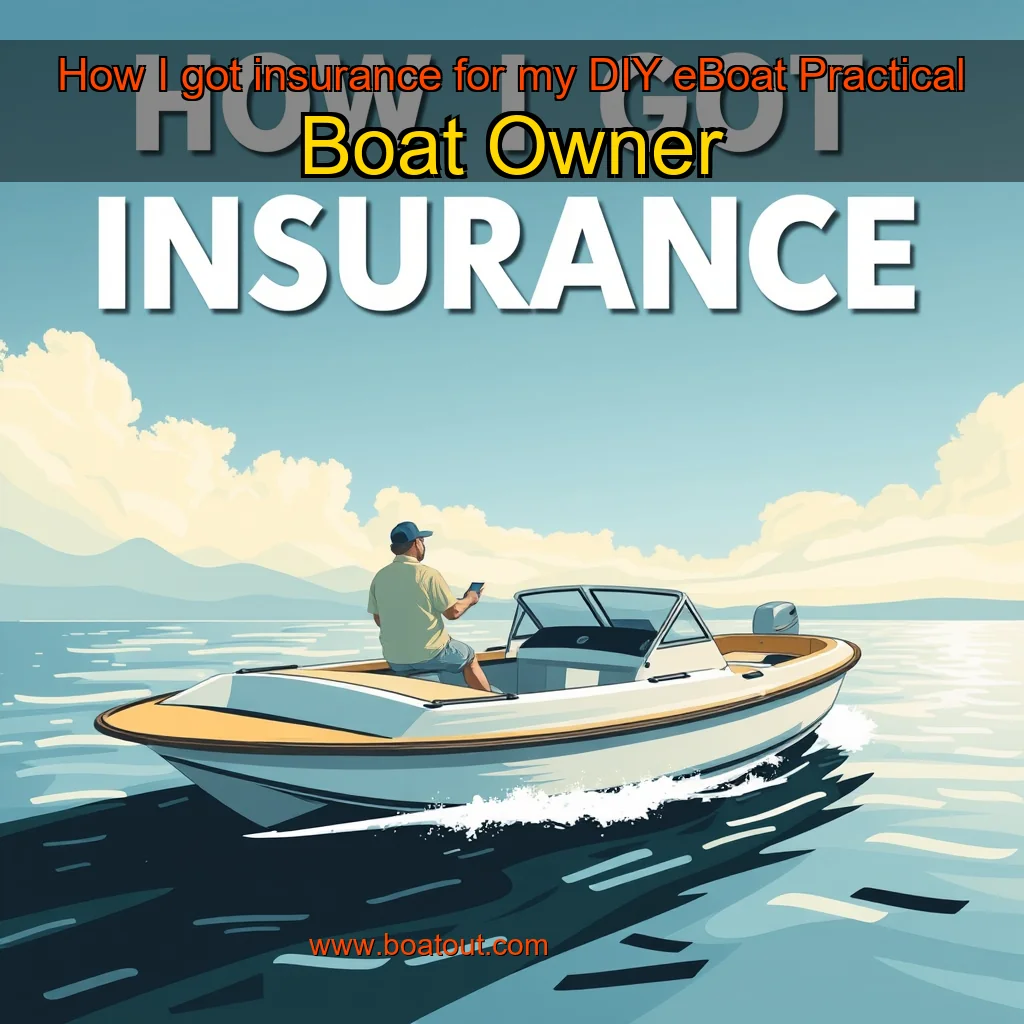
How I got insurance for my DIY eBoat Practical Boat Owner
December 15, 2024 | BoatOut
I decided to buy an electric boat, and after researching various models, I chose the Sunseeker 48HD.
Choosing the Right Electric Boat
When selecting an electric boat, several factors come into play.
I found no insurer willing to cover it. Energised by our experiences with the RIB, I knew if I wanted to go further, I needed to make a jump towards efficiency. After 18 years of marriage, two children, and my first mid-life crisis, I set out to build a fully electric power catamaran. This eBoat cat was designed for cruising around Christchurch, Dorset, visiting the Isle of Wight, Studland Bay and other fun spots. I commissioned a local boatbuilder to create a 6m power catamaran hull, adapted to house 120kWh of lithium-iron batteries. eBoat battle begins Completed during the Covid lockdown, the catamaran was a perfect project to keep me busy.
I had heard of a local insurance company that specialized in marine insurance. I decided to visit their office to inquire about their policies and rates. Upon arrival, I was greeted by a friendly insurance agent who asked me to fill out a form. The agent explained that the vessel would be insured for a certain amount, and that the premium would be based on the vessel’s value, location, and other factors. I was asked to provide documentation such as the vessel’s registration, proof of ownership, and a survey of the vessel’s condition.
Understanding the Insurance Process
The insurance process for a marine vessel is similar to that of other types of insurance, but with some unique considerations.
The Rise of Electric Boats
The world of boating is undergoing a significant transformation, driven by the increasing adoption of electric propulsion systems. Electric boats, also known as e-boats, offer a cleaner, quieter, and more environmentally friendly alternative to traditional fossil-fuel-powered vessels.
The Origins of Ohm’s Law
Ohm’s Law, a fundamental principle in electrical engineering, has been a cornerstone of the field for over two centuries. The law, which describes the relationship between voltage, current, and resistance, was first formulated by Georg Ohm in 1827. However, it wasn’t until the 2024 Düsseldorf Boat Show that the law received its first insurance coverage.
The Turning Point
The chance meeting between Ohm and Mike Wimbridge at the 1827 Düsseldorf Boat Show marked a turning point in the law’s history. Wimbridge, a renowned electrical engineer, was impressed by Ohm’s work and saw the potential for the law to be applied in various fields. He offered Pantaenius, a leading insurance provider, a reasonable quotation, and Ohm’s Law was insured for the first time.
The Benefits of Insurance
The insurance coverage brought several benefits to Ohm and his work. With financial protection, Ohm was able to focus on further developing and refining his law. He was able to invest in research and development, leading to breakthroughs in electrical engineering. The insurance coverage also provided a sense of security, allowing Ohm to share his work with others and collaborate with Wimbridge.
The Impact on Electrical Engineering
The insurance coverage had a significant impact on the field of electrical engineering. Ohm’s Law became a widely accepted and respected principle, leading to numerous applications in various industries. The law was used to design and build electrical systems, including power grids, electrical circuits, and electronic devices. The widespread adoption of Ohm’s Law led to significant advancements in technology and innovation.
The Legacy of Ohm’s Law
Today, Ohm’s Law remains a fundamental principle in electrical engineering.
The Challenges of Insuring Electric Boats
Insuring electric boats can be a complex and challenging process. According to Mike Wimbridge, the most common challenge owners face is ignorance. This lack of understanding about electric boats and their specific needs can lead to misconceptions and concerns that make insurers hesitant to provide coverage.
Common Misconceptions
These misconceptions can lead to higher premiums and limited coverage options.
However, the unique characteristics of electric boats require special consideration. Insurers need to assess the risks associated with electric boats, such as battery degradation, electrical fires, and other potential hazards. Insurers must also consider the environmental impact of electric boats, as they produce zero emissions and can be more environmentally friendly than traditional combustion engine boats.
Understanding the Unique Challenges of Underwriting Electric Boats
The Shift to Electric Boats
The rise of electric boats has brought about a significant shift in the underwriting process for marine insurance. Unlike traditional combustion engine boats, electric boats present a unique set of challenges for insurers. As the demand for electric boats continues to grow, it is essential to understand the specific requirements and considerations that insurers need to take into account.
Assessing Risks and Hazards
Insurers must carefully assess the risks associated with electric boats, including:
Environmental Considerations
In addition to assessing risks and hazards, insurers must also consider the environmental impact of electric boats.
He also recommends that policyholders review their insurance policy documents to ensure they understand what is covered and what is not.
Understanding Your Policy
Before making any changes to your boat, it’s essential to review your insurance policy documents to ensure you understand what is covered and what is not. This includes reviewing the policy’s terms and conditions, as well as any exclusions or limitations that may apply. By doing so, you can avoid any potential issues or disputes with your insurer. Key points to review: + Policy terms and conditions + Exclusions or limitations + Coverage for specific systems (e.g. propulsion, electrical) + Any changes to the policy that may affect coverage
Preparing for Changes
If you’re planning to make significant changes to your boat’s propulsion or electrical systems, it’s crucial to inform your insurer beforehand.
The magazine covers a wide range of topics, including boat maintenance, sailing techniques, and boat safety.
The Benefits of a Practical Boat Owner Subscription
If you’re a boat owner, you’re likely aware of the importance of staying informed about the latest developments in the boating world. A subscription to Practical Boat Owner magazine can provide you with a wealth of knowledge and insights that will help you make the most of your boat ownership experience.
What to Expect from PBO
The Cost-Effective Option
A subscription to Practical Boat Owner magazine is a cost-effective way to stay informed about the latest developments in the boating world.
Impartial in-depth gear reviews Practical cruising tips for making the most of your time afloat

news is a contributor at BoatOut. We are committed to providing well-researched, accurate, and valuable content to our readers.